Xenopixel vs Neopixel: What the Difference Is and Which to Buy
Xenopixel is not a rival to neopixel. Neopixel is the blade type, a strip of individually addressable LEDs. Xenopixel is a ready-made board that drives that strip. The real choice is Xenopixel versus Proffieboard, Golden Harvest v4 or CFX. Xenopixel is cheaper and simpler, Proffie is more customisable.
On this page9 sections
Xenopixel vs neopixel is not a head-to-head. Neopixel is a blade type: a clear tube with a strip of individually addressable LEDs inside. Xenopixel is a ready-made control board that lights that strip and plays sound [1][2]. Every Xenopixel saber is therefore a neopixel saber. The real decision is Xenopixel against Proffieboard, Golden Harvest v4 (GHv4) or CFX. Xenopixel is the cheaper, simpler choice. Proffie gives far more control.
New to the terms? Start with what a neopixel lightsaber is and the wider Tech hub.
Xenopixel vs neopixel: blade versus board
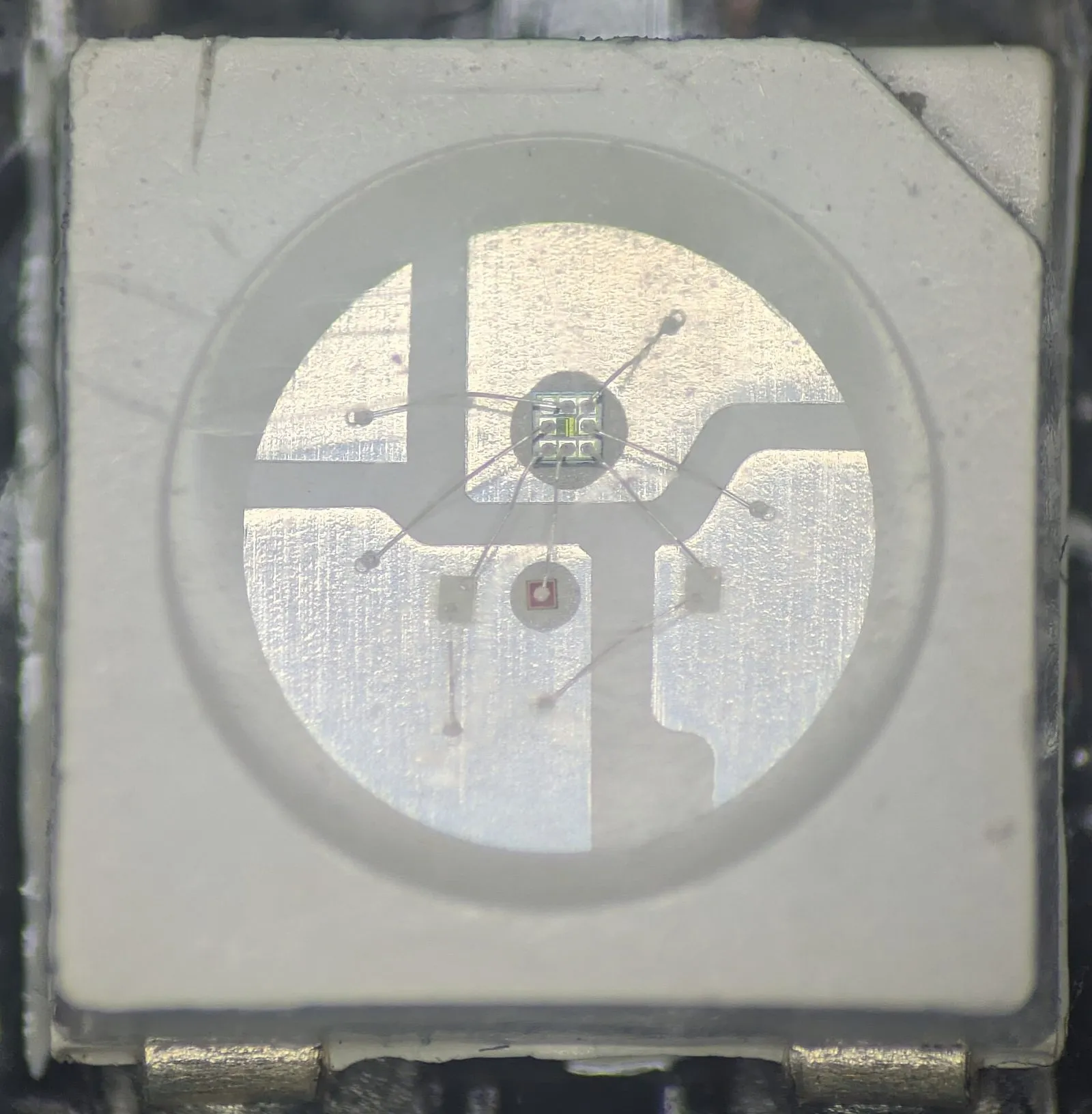
Neopixel lightsabers are the standard pixel design today, and a Xenopixel lightsaber is the usual entry model. A neopixel blade holds hundreds of LEDs along its length, and each one can be driven separately. That is what makes animated ignition, flicker and clash effects possible. The name NeoPixel belongs to Adafruit, so shops often say “pixel blade” instead [3].
A board is the electronics in the hilt: it reads the motion sensor, plays sound from an SD card and tells the blade what to show. Xenopixel is a commercial name for a family of low-cost pixel boards with preset effects and a Bluetooth app. Ultrasabers states that its Xenopixel sabers run on the Xeno3.0 board, while its baselit models use a board called XRGB3.0 [1]. The maker of the boards is not named on the vendor pages we checked, so we do not name one (unverified).
The competing boards can drive the same kind of pixel blade. Proffieboard is an open-source controller [4][5]. GHv4 and CFX are closed commercial boards [6][7]. For the full background on each, see the soundboards guide.
Xenopixel vs Proffie, GHv4 and CFX side by side
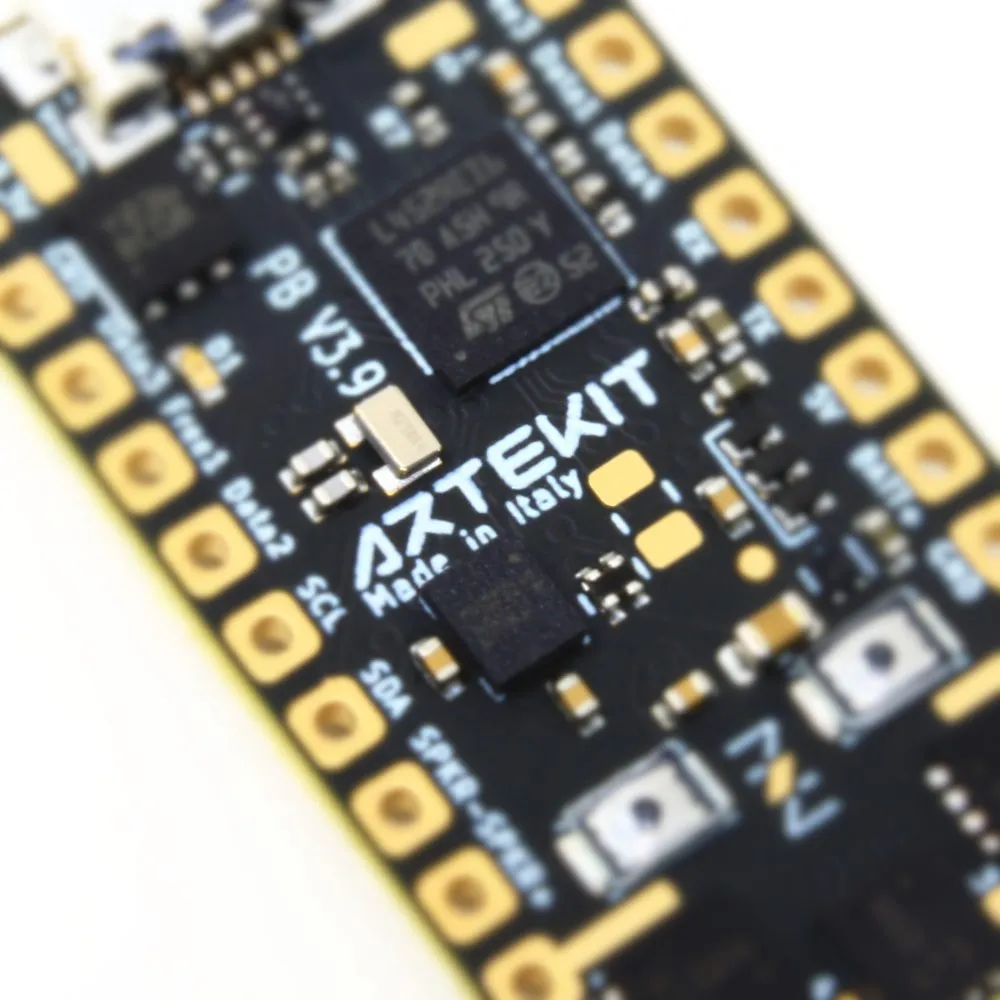
Prices below are for the board alone, except where noted. Vendor listings differ, so treat them as a snapshot.
| Xenopixel (Xeno3.0) | Proffieboard V3.9 | Golden Harvest v4 | CFX Mk3 | |
|---|---|---|---|---|
| Type | Ready-made board inside mass-market sabers | Open-source board and software | Closed commercial board with app | Closed commercial board from Plecter Labs |
| Setup | Works out of the box | Config files or an on-saber edit mode | App or browser tool | Config files, no programming |
| Customisation | Presets and fonts via app | Very high | Medium to high | High, inside Plecter’s system |
| Phone control | Bluetooth app | No official app | Wi-Fi and Bluetooth, ForceSync and a web app | OLED screen support, no app listed |
| Listed features | 16 or 34 preset fonts (Ultrasabers) [1] | Up to 5 simultaneous samples, 6 LED drivers [4] | Wi-Fi font transfer, auto font conversion [6] | SmoothSwing, 14 fonts on SD, 3.2 W amplifier [7] |
| Board price | Rarely sold alone | EUR 45.90 to 50.90 (Artekit) [4] | $55 (TCSS) [6] | $84.99 (TCSS) [7] |
Prices for GHv4 and CFX are from a single vendor page, as of November 2026. Proffie’s price is from the maker’s shop in euros, ex-tax, as of November 2026 [4].
What each side gives you
Where Xenopixel wins
- Price. Ultrasabers lists premade Xenopixel sabers from $320 to $355 on the first page of its category, as of November 2026 [1]. In one hilt, CCSabers lists the SEA-8 at $325 with Xenopixel and $395 with Proffieboard V2.2 (unverified, vendor page was not reachable when we re-checked) [8].
- Ease. It works on delivery. NovaSaber, a shop that sells both kinds, calls Xenopixel the simpler plug-and-play option [12]. Padawan Outpost lists distinct ignition and blade effects and gesture control for it [9].
- Choice of hilts. Many mass-market sabers ship with Xenopixel, so there are many designs at every price.
Where Proffie wins
- Control. ProffieOS is open source, and the board is described as an open-source lightsaber controller [5]. Blade styles, effects and button behaviour can all be changed. The community style tools make a lot of this possible without writing code [10].
- Longevity. The code is public on GitHub, with ProffieOS 8.10 shown as the latest release on the releases page [11]. You are not tied to one factory app.
- Hardware. V3.9 lists a 6-axis motion sensor, USB charging and a class-D amplifier [4]. Our handbook notes that Artekit marks the older V2.2 as discontinued in favour of V3.9, though the V3.9 product page itself does not say so (unverified) [12]. Ask a seller which version you get.
- Xenopixel pro: low price, no setup, app control, many hilts.
- Xenopixel con: narrower customisation, vendor-dependent support.
- Proffie pro: deep customisation, open code, active community.
- Proffie con: learning curve, higher total price.
Where GHv4 and CFX fit
GHv4 sits in the middle. TCSS lists built-in Wi-Fi and Bluetooth, a remote font switch, wireless SD card access and automatic conversion of third-party sound fonts [6]. One retailer guide prices the older v3 at about $60, calls it beginner-friendly with large solder pads, and says its features compare with Proffie and CFX [13]. It is a fit for someone who finds Xenopixel too limited but does not want to learn Proffie.
CFX is the descendant of Plecter’s Crystal Focus. TCSS lists one or two cells, SmoothSwing, an OLED display option and two LED strip outputs [7]. A retailer guide describes it as easy to use, with preset effects such as fire and instability [13]. It is less common in ready-made sabers than Xenopixel or Proffie.
Is a pixel blade fragile?
The board does not decide how tough the blade is. The blade does. The Saber Factory rates a Xeno3 neopixel blade’s dueling durability as “Medium”, saying in-blade LED strips can break under stress, and rates baselit as “High” [2]. Ultrasabers calls its Xenopixel blades durable for light combat [1]. For hard contact, a baselit saber is the safer pick. Our best lightsaber guide covers the dueling choice.
Power use also differs
Pixel strips draw more power than a single baselit LED. The Saber Factory lists a 3600 mAh battery with 30 to 90 minutes per charge for its Xeno3 neopixel, against 3000 mAh and 1 to 3 hours for baselit [2]. Both use lithium-ion cells, so read the battery guide before charging anything.
Which should you buy?
- Buy Xenopixel if this is your first pixel saber and you want it to work on day one. Budget about $180 to $400. Example: SabersPro Hunter, Xenopixel V3 at $180 (unverified) or CCSabers SEA-8, Xenopixel at $325 (unverified).
- Buy Proffie if you want to change everything and will keep the saber for years. Expect from about $395. Example: CCSabers SEA-8, Proffieboard at $395 (unverified). Ask which board version ships.
- Buy GHv4 if you want app control with more depth than Xenopixel. Ready-made GHv4 saber prices were not checked (unverified).
On a tight budget, see best lightsabers under $100.
A newer Xenopixel board, Xeno4, was announced in marketing copy by a vendor for summer 2026. We could not confirm it is on sale (unverified), so waiting for it is not advised [15].
FAQ
Is Xenopixel the same as neopixel?
No. Neopixel is the blade type. Xenopixel is a board that drives a neopixel blade [1][2].
Is Xenopixel worse than Proffie?
It is more limited, not worse. It is easier and cheaper. Padawan Outpost describes Proffie as offering unparalleled customisation [9].
Can I upgrade a Xenopixel saber to Proffie?
Sometimes, by swapping the board or chassis, but it depends on the hilt. Ask the vendor first. NovaSaber says its Xenopixel owners can move to its own SN-Pixel V4 Pro core [12].
Do Xenopixel and Proffie use the same blades?
Both use pixel blades. Connector compatibility between brands was not checked (unverified).
Sources
- Ultrasabers, premade Xenopixel sabers and FAQ, https://ultrasabers.com/product-category/premade-xenopixel-sabers/ (accessed 2026-11-06)
- The Saber Factory, saber tech comparison, https://www.thesaberfactory.com/pages/saber-tech-comparison (accessed 2026-11-06)
- Ultrasabers, what is a neopixel lightsaber (via handbook/sabers/generations.md), https://ultrasabers.com/holocron/what-is-a-neopixel-lightsaber/ (accessed 2026-11-06)
- Artekit, Proffieboard V3.9, https://www.artekit.eu/products/devboards/proffieboard-v3-9/ (accessed 2026-11-06)
- Proffieboard V3 page, Fredrik Hubinette, https://fredrik.hubbe.net/lightsaber/v6/ (accessed 2026-11-06)
- TCSS, Golden Harvest V4 sound module, https://thecustomsabershop.com/Electronics/Sound-Modules/Golden-Harvest-V4-Sound-Module (accessed 2026-11-06)
- TCSS, Crystal Focus X Mk3, https://www.thecustomsabershop.com/Electronics/Sound-Modules/Crystal-Focus-Sound-Module-X-MK3 (accessed 2026-11-06)
- CCSabers, SEA-8 listing, https://www.ccsabers.com/products/sea-8-rgb-neopixel-saber (accessed 2026-11-06)
- Padawan Outpost, Proffie vs Xenopixel, https://padawanoutpost.com/blogs/outpost-archive/proffie-vs-xenopixel (accessed 2026-11-06)
- Fett263, https://fett263.com/ (accessed 2026-11-06)
- ProffieOS releases, https://github.com/profezzorn/ProffieOS/releases (accessed 2026-11-06)
- Handbook, saber generations, handbook/sabers/generations.md (resting on NovaSaber, https://novasaber.com/pages/neopixel-lightsaber-technology, and Artekit)
- Superneox, all about lightsaber soundboard cores, https://superneox.com/blogs/guides/all-about-lightsaber-soundboard-cores (accessed 2026-11-06)
- City of Melbourne (FL) Fire Department, lithium-ion battery safety tips (attributed to NFPA), https://www.melbourneflorida.org/Government/Departments/Fire-Department/Fire-Prevention-Office/Fire-Prevention-Safety-Tips/Lithium-ion-Battery-Safety-Tips (accessed 2026-11-06)
- The Saber Factory, Xeno4 announcement (vendor marketing), https://www.thesaberfactory.com/blogs/lightsaber-knowledge/xeno4-is-coming-to-the-lightsaber-world (accessed 2026-11-06)
Editorial team
Writes for Saber Forge Forum. Every guide is checked against the maker's specs and dated, so you know how fresh it is.
Read next
Neopixel Lightsaber: What It Is and Which One to Buy
A neopixel lightsaber has an LED strip inside the blade, so the glow is even from hilt to tip and the blade can animate. Entry models start around $180, mid-range around $320 to $400, Proffie sabers from about $400. Duelling needs a tougher blade.
Best Lightsaber to Buy in 2026: Picks by Use and Budget
There is no single best lightsaber, so this list picks one per use: Xenopixel for a first serious saber, baselit for duelling and kids, a licensed Hasbro replica for the shelf, Proffieboard for DIY. Specs, price bands and warranty terms from vendor pages.
Neopixel Lightsaber Under $100: What Is Real in 2026
Under $100, vendor pages sell baselit sabers, not full-size neopixel ones. Verified neopixel prices start higher: Xenopixel at $180 (unverified) and Ultrasabers at $320. Here is what a $100 budget buys, the cheapest real pixel step up, and what to check on marketplace listings.