Lightsaber Batteries: 18650 Cells, Charging, Runtime and Safety
Most lightsabers run on a rechargeable lithium-ion cell, usually the 18650 format (18 mm by 65 mm). Pixel blades drain it faster than baselit ones, with listings quoting 30 to 90 minutes versus 1 to 3 hours. Use the right charger, never charge unattended, and retire any cell that swells, leaks or overheats.
On this page9 sections
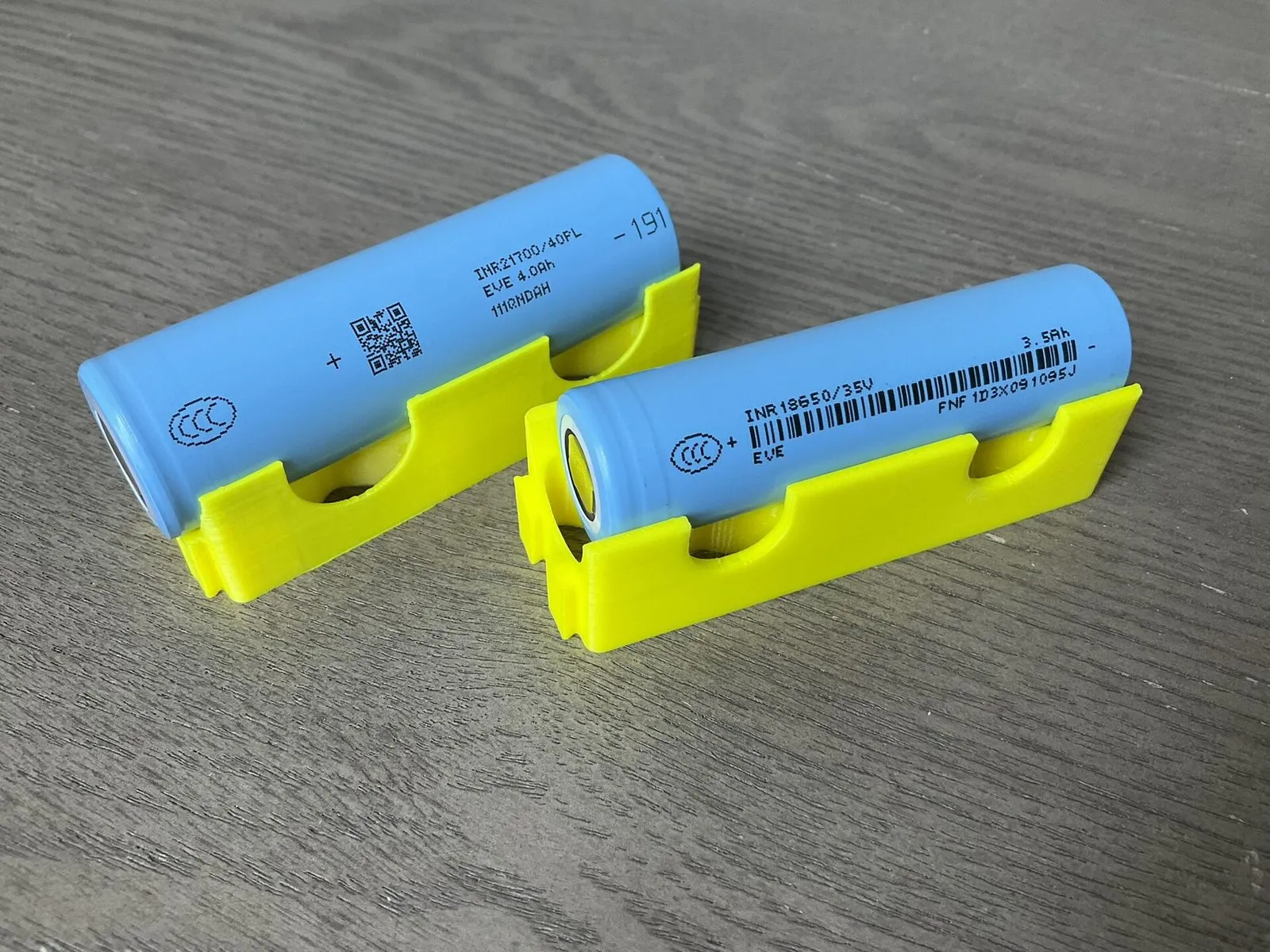
Most lightsabers are powered by a rechargeable lithium-ion cell, and the common format is the 18650, a cylinder about 18 mm wide and 65 mm long [1][2]. Lightsaber batteries matter more than most buyers expect: a pixel blade can empty a cell in 30 to 90 minutes, while a baselit blade lasts 1 to 3 hours on a similar pack, per one vendor’s listing [3]. Charge with the supplied charger, never unattended, and retire any cell that swells, leaks or overheats.
This page is part of the Tech hub. It explains cells, not how to build a pack. If you are assembling a saber, read the build guide alongside it.
Lightsaber batteries: what an 18650 cell is
An 18650 lightsaber cell is the same format sold as an 18650 battery for notebook PCs and other portable devices [2]. The name comes from the size: 18 mm diameter, 65 mm length. Panasonic’s NCR18650B datasheet lists maximum dimensions of 18.5 mm by 65.3 mm, a nominal voltage of 3.6 V and a typical capacity of 3350 mAh [2]. Our handbook calls it the standard saber format [1].
| Panasonic NCR18650B (reference cell) | Value from datasheet [2] |
|---|---|
| Nominal voltage | 3.6 V |
| Typical capacity | 3350 mAh (minimum 3250 mAh) |
| Standard charge | 1625 mA constant current to 4.20 V, about 4 hours |
| Charge temperature | 0 to 45°C |
| Discharge temperature | -20 to 60°C |
| Weight | 48.5 g maximum |
This is one example cell, not a recommendation. The datasheet is a reference copy and carries a disclaimer that its data are descriptive only [2]. Shop listings for the same cell quote different maximum discharge currents, so read the maker’s sheet, not the listing title (unverified).
Capacity vs discharge rating
Two numbers do different jobs.
- Capacity (mAh) says how long the cell lasts. Higher is more runtime.
- Discharge rating (amps) says how much current the cell can safely deliver. A saber blade can pull a lot at once, so a cell with high capacity but a low rating may sag or overheat.
A 2016 forum discussion in our handbook recommends caring about current delivery rather than mAh, and mentions roughly 4 A for a single blade and about 8 A for a crossguard setup, advising cells rated 8 to 10 A [1]. That is old community advice, so check it against your board’s documentation. Using the Proffieboard maker’s notes: the board’s battery pad accepts 2.6 to 5 V, and its USB charging is rated at 450 mA [6].
Protected and unprotected cells
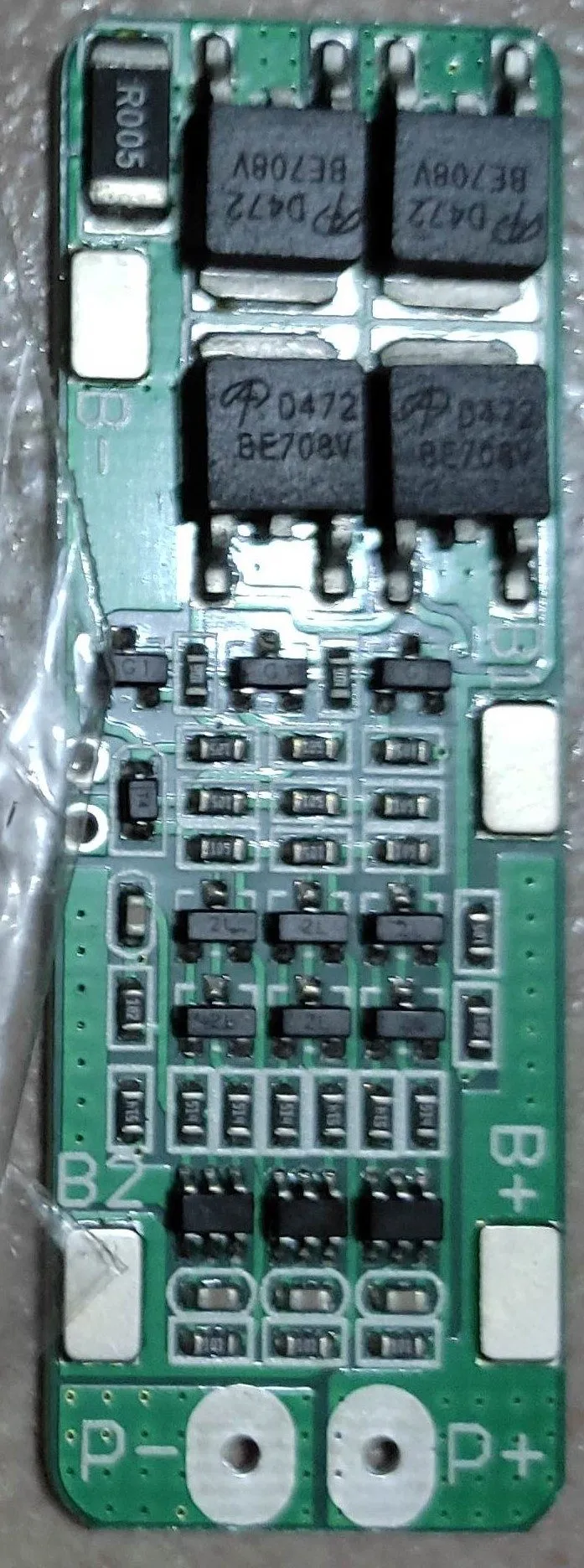
A protected cell has a small circuit that guards against over-discharge and overcharge. An unprotected cell has none, so the board or charger has to do that job [1].
Protection is a safety net, not a guarantee. Battery University states that external protection circuits cannot stop thermal runaway once it has started [5]. Quality of the cell matters more than the circuit. Buy cells from a named maker through a reputable seller and avoid unbranded cells with extreme capacity claims.
- Protected cell, pro: guards against deep discharge and overcharge.
- Protected cell, con: longer, may not fit tight hilts, and cannot stop internal failures.
- Unprotected cell, pro: shorter, usually fits more hilts.
- Unprotected cell, con: needs a board or charger that watches voltage.
Runtime: what to expect
Runtime is capacity divided by current draw. A cell rated 3350 mAh feeding a 1 A average draw would last roughly 3 hours; at 3 A, roughly one hour. Real blades draw varying current, so these are illustrations, not promises.
Vendor figures help set expectations. The Saber Factory lists a 3000 mAh battery for its Xeno3 baselit saber at 1 to 3 hours per charge, and a 3600 mAh battery for its Xeno3 neopixel saber at 30 to 90 minutes, both rated for about 200 cycles [3]. Ultrasabers says pixel blades are more fragile and drain faster than baselit ones [7]. For more on blade types, see Xenopixel vs neopixel.
Charging rules
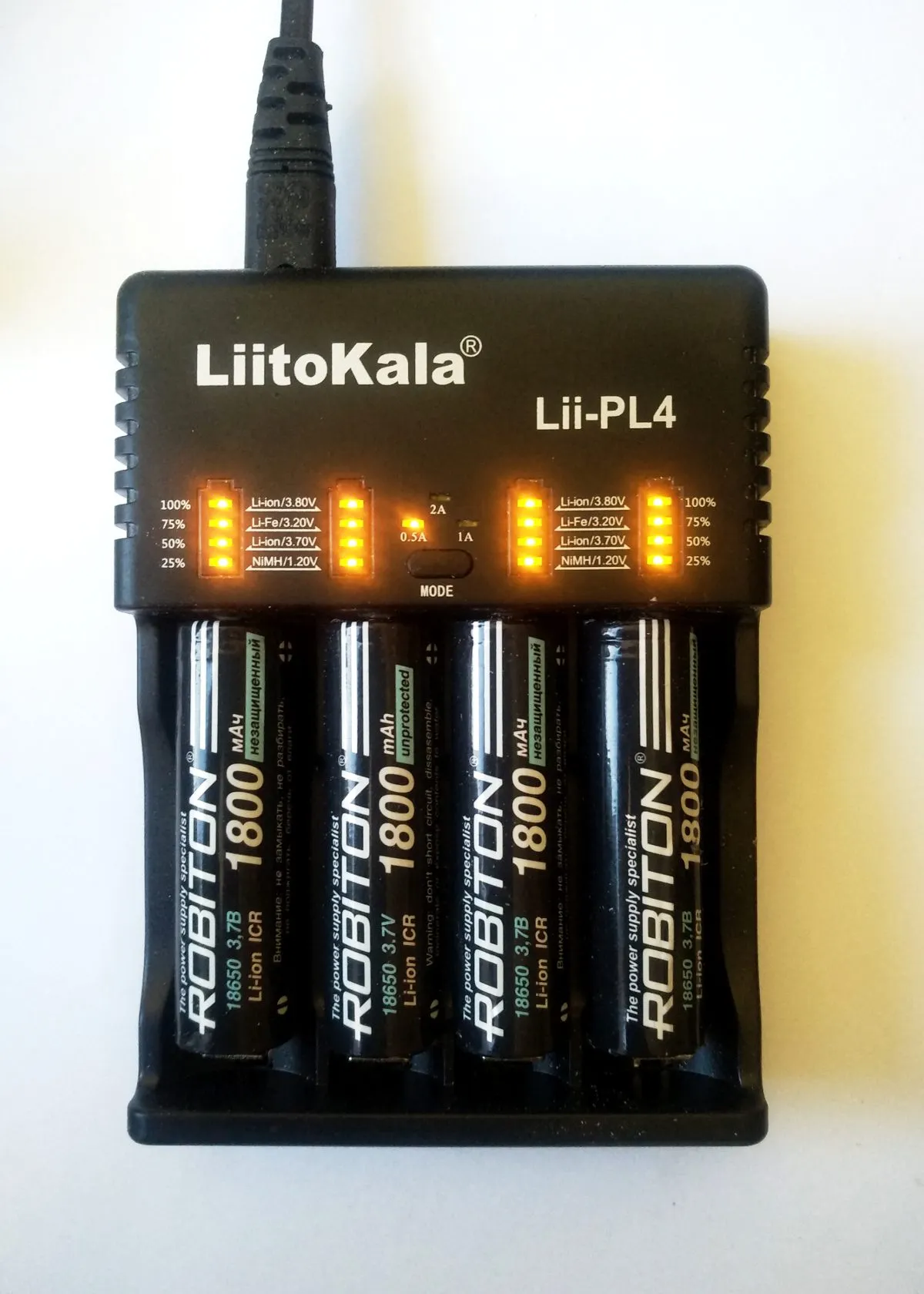
- Use the charger that came with the saber and the battery that came with it. Buy only chargers and batteries listed by a recognised testing lab [4].
- Stop when full. Do not leave a cell on charge overnight [4].
- Charge one device at a time, at room temperature, on a hard surface [4].
- Respect temperature. Do not charge below 0°C or above 40°C [4]. Panasonic’s datasheet gives 0 to 45°C for its cell [2].
- Never let a cell sit deeply discharged. Battery University warns that a Li-ion cell must not fall below 2 V per cell for any length of time, because recharging such a cell may make it unstable [5].
- Know your board. The Proffieboard maker warns that its reverse-polarity protection does not work during charging, and that pixel strips can be damaged if the battery is connected backwards [6]. Remove the SD card before soldering [6].
Many sabers charge through a port in the hilt. A port that feels loose or heats up is a repair job, not something to tape over.
Storage, travel and disposal
Keep cells at room temperature, out of direct sunlight and hot vehicles, and away from liquids and children [4]. Do not put batteries in household trash or curbside recycling: use a battery recycling or hazardous waste drop-off [4]. Airline rules on carrying lithium cells differ and change, so check with the carrier before flying. Some owners remove the kill key and battery for travel, but that is not a rule (unverified) [1].
When to stop using a cell
Warning signs from fire-safety guidance include an odd smell, a change in colour or shape, overheating, leaking, smoke or failure to hold a charge [4]. Battery University adds that a failing cell can reach roughly 500°C and that heat can spread to neighbouring cells [5]. If a fire starts, leave the building and call emergency services rather than fighting it [4].
FAQ
What battery does a lightsaber use?
Most use a rechargeable lithium-ion cell in the 18650 format. Some small sabers use other cells; check the listing [1][2].
How long does a lightsaber battery last?
One vendor lists 30 to 90 minutes for a pixel saber and 1 to 3 hours for baselit, per charge [3].
Can I leave a lightsaber charging overnight?
Fire-safety guidance says to stop charging once full and not to leave charging unattended [4].
Is a protected cell safer?
It adds a guard against over-discharge and overcharge, but it cannot stop internal failure [5].
What do I do with a swollen battery?
Stop using it, keep it away from flammable items, and take it to a battery recycling drop-off [4][5].
Sources
- Handbook, what lightsabers are and DIY safety, handbook/what-are-sabers.md and handbook/sabers/diy.md (resting on 2016 forum threads)
- Panasonic, NCR18650B datasheet (reference copy), https://e2e.ti.com/cfs-file/__key/communityserver-discussions-components-files/196/Panasonic-NCR18650B-datasheet.pdf (accessed 2026-11-06)
- The Saber Factory, saber tech comparison, https://www.thesaberfactory.com/pages/saber-tech-comparison (accessed 2026-11-06)
- City of Melbourne (FL) Fire Department, lithium-ion battery safety tips (attributed to NFPA), https://www.melbourneflorida.org/Government/Departments/Fire-Department/Fire-Prevention-Office/Fire-Prevention-Safety-Tips/Lithium-ion-Battery-Safety-Tips (accessed 2026-11-06)
- Battery University, BU-304a Safety Concerns with Li-ion, https://batteryuniversity.com/article/bu-304a-safety-concerns-with-li-ion (accessed 2026-11-06)
- Proffieboard V3 page, Fredrik Hubinette, https://fredrik.hubbe.net/lightsaber/v6/ (accessed 2026-11-06)
- Ultrasabers, what is a neopixel lightsaber (via handbook/sabers/generations.md), https://ultrasabers.com/holocron/what-is-a-neopixel-lightsaber/ (accessed 2026-11-06)
Editorial team
Writes for Saber Forge Forum. Every guide is checked against the maker's specs and dated, so you know how fresh it is.
Read next
Lightsaber Soundboards Explained: Proffie, Xenopixel, CFX, GHv4
A lightsaber soundboard is the control board in the hilt: it reads motion, plays sound from an SD card and drives the blade lights. The main families are Xenopixel (cheap, ready-made), Golden Harvest v4 (mid-range), CFX (Plecter, closed) and Proffieboard (open source, most flexible). Board prices run from about $45 to $85.
Xenopixel vs Neopixel: What the Difference Is and Which to Buy
Xenopixel is not a rival to neopixel. Neopixel is the blade type, a strip of individually addressable LEDs. Xenopixel is a ready-made board that drives that strip. The real choice is Xenopixel versus Proffieboard, Golden Harvest v4 or CFX. Xenopixel is cheaper and simpler, Proffie is more customisable.
Build Your Own Lightsaber: A Step-by-Step DIY Guide
To build your own lightsaber, pick a route (assembled kit, plug-in modules, or a soldered Proffieboard build), buy a matching hilt and parts, bench-test the wiring, then install the software and close the hilt. A first soldered build is a weekend or two. Read the battery and soldering safety rules first.