Lightsaber Parts List: Everything You Need to Build One
A DIY lightsaber needs a hilt, chassis, sound board, blade, protected 18650 battery, speaker, switches, wire and a charge port. Verified prices as of November 2026: boards from $40.40, empty hilts from $51.25, a pixel blade bundle at $104.28. Battery and speaker prices are unverified.
On this page12 sections
A DIY lightsaber needs nine kinds of lightsaber parts: hilt, chassis, sound board, blade, battery, speaker, switches, charge port and wiring. Price bands below come from vendor pages read in November 2026. Where no price could be read, it says unverified.
For the build order, use the build your own lightsaber guide. For body choices, see lightsaber hilts.
The short lightsaber parts list
| Part | Role | Price band (as of November 2026) | Source |
|---|---|---|---|
| Empty hilt | Body you hold | $51.25 to $66.25 (one vendor), typically $100 to $350 (another) | [1][2] |
| Chassis | Frame for board, speaker, battery | (unverified) | [3] |
| Sound board | Sound, light, buttons | $40.40 to $55.00; EUR 45.90 to 50.90 | [3][4][5] |
| Blade | Polycarbonate tube, pixel or baselit | $104.28 for a 35.375 inch pixel bundle | [3] |
| Battery | Protected 18650 | (unverified) | |
| Speaker | 28 mm common | (unverified) | |
| Switches, charge port, wire | Control and power | (unverified) |
Hilt and chassis
An empty hilt is the shell. It comes without a blade or electronics [1]. One vendor lists empty hilts from $51.25 to $66.25, as of November 2026, with names such as Initiate V2, Apprentice V4 and Dominix V2 [1]. Another lists empty hilts typically between $100 and $350 [2]. Its premium range is where custom and fan-designed bodies sit.
The chassis is the inner frame that holds the board, speaker and battery so nothing rattles [6]. It must fit the specific hilt. Chassis can be 3D printed, metal or supplied with the hilt [6]. A shop front page lists chassis and chassis parts as a category but gave no named product or price [3]. Search for the chassis by your hilt name and blade diameter.
Plastic holds heat worse than metal, so powerful LEDs in a printed body need an aluminium tube inside [6].
Sound board
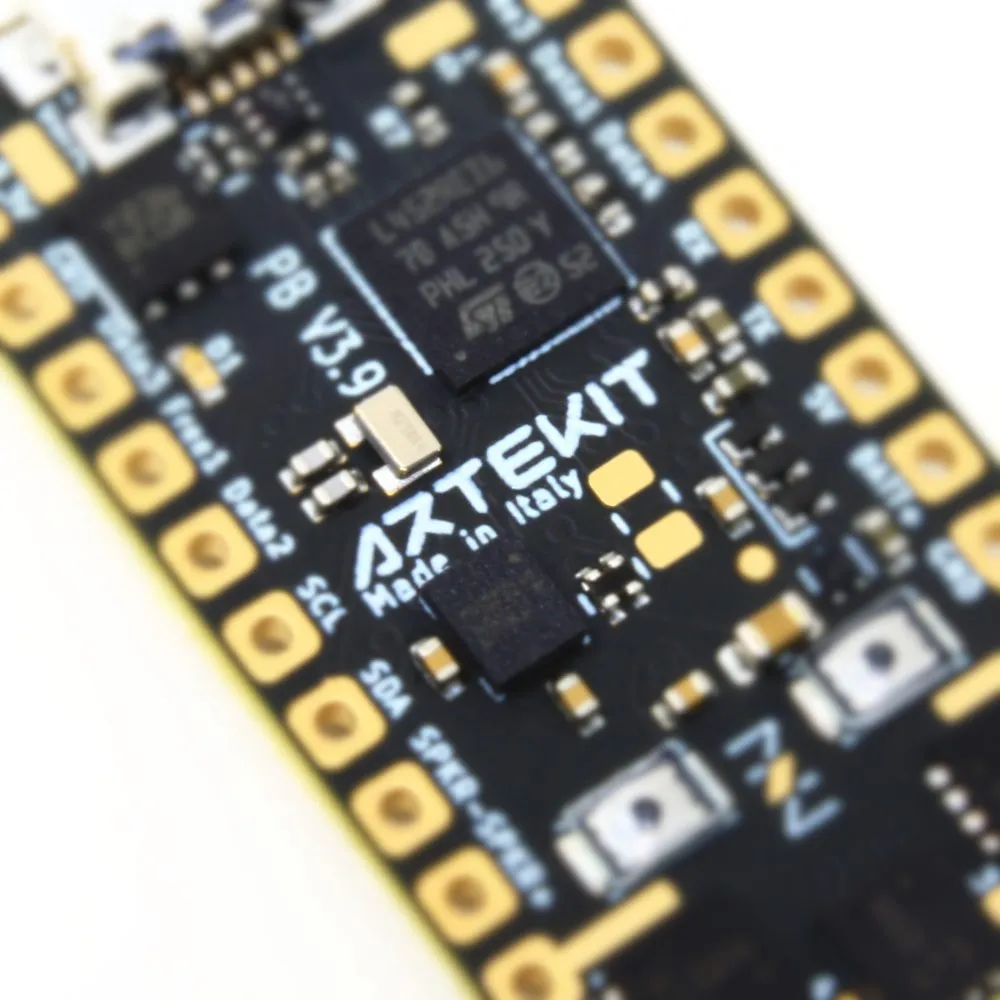
The board runs sound, light and buttons. The common open choice is the Proffieboard V3.9. Vendor listings state:
- Electronics123: $40.40, plus $7.45 for a 16GB SD card; 3 W mono amplifier, six FETs, 450 mA USB charging [4].
- Artekit: EUR 45.90 to 50.90 depending on the microSD option; supports Ws281X, PL9823 and SK68 pixel strings [5].
- Another shop lists a Golden Harvest V4 sound module at $55.00 and a prebuilt MHSv1 Proffie 3.9 core at $152.72 [3].
Board details are in the soundboards guide. Check that the board matches your blade type: pixel blades use a data pad, baselit LEDs use the FET outputs through a resistor [7].
Blade
Blades are sold as baselit tubes, pixel blades and separate blade-building parts [2][3]. One shop lists a 7/8 inch show blade builders bundle, 35.375 inches long, at $104.28, as of November 2026 [3]. Blade plugs and retention screws are separate small parts [6].
Pixel blades are brighter along the whole length but more fragile, and the technology split is covered in Xenopixel vs Neopixel [8].
Battery and charging
The standard cell is a protected 18650. The handbook notes that discharge current matters more than capacity, citing 2016 forum advice for cells rated 8 to 10 A [6]. A vendor listing seen in search results describes saber builds with 18650 3.7 V 3500 mAh 10 A protected cells [9]. No battery price was readable on a fetched page, so it is unverified.
The Proffieboard charges over USB at 450 mA, and its reverse polarity protection does not work while charging [7][4]. Add a charge port that matches your charger.
Speaker, switches and wiring
Speakers are sold by diameter, with 20, 22, 24 and 28 mm listed as categories at one shop [3]. The handbook suggests a speaker impedance of 4 to 8 ohms [6]. Another shop sells switches, connectors, OLED screens and PTFE wire [2].
For wire, the handbook recommends thin conductors of about 30 AWG for signals and thicker wire for battery negative [6]. All prices in this group are unverified.
Tools and consumables
You need a temperature-controlled iron, solder, flux, cutters, a stripper, a multimeter and heat-shrink [6]. An iron of at least 25 W is advised for cleaner joints [11]. Tool prices were not collected.
What must match what
| Check | Why |
|---|---|
| Blade diameter vs hilt bore | The blade seats in the emitter [6] |
| Chassis vs hilt | The frame is cut for one body [6] |
| Board vs blade type | Pixel data pad or LED outputs [7] |
| Battery vs board | Battery+ accepts 2.6 to 5 V [7] |
| Speaker vs chassis | Diameter and depth [6] |
Order to buy in
Buy in an order that limits expensive mistakes. These DIY lightsaber parts depend on each other, so lock the first choices before the later ones.
- Blade and hilt first. They fix the diameter and length that everything else must fit [6].
- Chassis next, matched to the hilt [6].
- Board, speaker and battery holder sized to the chassis [6][7].
- Switches, charge port and wire once you know where they sit in the body [6].
- Tools and consumables can be bought at any point, but not skipped.
Small items go missing most often. The handbook lists blade plug, retention screw, heat-shrink, solder and flux in its checklist, and builders forget them [6]. Order spares of the blade plug and screw, since a stripped retention screw is a known complaint [6].
Where to shop
Vendors that appeared in this research: Ultrasabers for empty hilts [1], Saberbay for empty hilts, boards, switches and blades [2], The Custom Saber Shop for chassis, batteries and speakers [3], and Electronics123 and Artekit for boards [4][5]. Delivery to your country is not guaranteed: check at checkout [6]. One shop says it is ending production of its modular hilt system and conversion kits, so confirm stock before planning around them [3].
FAQ
What parts do I need for a lightsaber?
A hilt, chassis, sound board, blade, protected battery, speaker, switches, charge port and wire, plus soldering tools [6].
How much does a DIY lightsaber cost?
No single total was priced. Board, hilt and blade alone start around $196 using the lowest verified prices, as of November 2026 [1][3][4]. Other parts add to that.
Can I mix parts from different makers?
Often not. Modular systems are not interchangeable, so check compatibility first [6].
Do I need a pixel blade?
No. Baselit blades are cheaper and sturdier but light unevenly [8].
Sources
- Ultrasabers, Empty sabers, https://ultrasabers.com/product-category/empty-sabers/ (accessed 2026-11-06)
- Saberbay, shop front page, https://www.saberbay.com/ (accessed 2026-11-06)
- The Custom Saber Shop, shop front page, https://www.thecustomsabershop.com/ (accessed 2026-11-06)
- Electronics123, Proffieboard V3.9, https://www.electronics123.com/shop/proffieboard-v3-9-open-source-lightsaber-sound-board-12096 (accessed 2026-11-06)
- Artekit, Proffieboard V3.9, https://www.artekit.eu/products/devboards/proffieboard-v3-9/ (accessed 2026-11-06)
- Handbook, DIY sabers, handbook/sabers/diy.md (reviewed 2026-11-01)
- Proffieboard V3 project page, https://fredrik.hubbe.net/lightsaber/v6/ (accessed 2026-11-06)
- Handbook, What are lightsabers, handbook/what-are-sabers.md (reviewed 2026-11-01)
- Shtok Customworx, custom saber listing (search result snippet), https://shtokcustomworx.com/pages/darth-maul-tpm-ep-i-custom-saber (accessed 2026-11-06)
- Battery University, BU-304a, https://batteryuniversity.com/article/bu-304a-safety-concerns-with-li-ion (accessed 2026-11-06)
- Adafruit, Guide to excellent soldering, https://learn.adafruit.com/adafruit-guide-excellent-soldering (accessed 2026-11-06)
Editorial team
Writes for Saber Forge Forum. Every guide is checked against the maker's specs and dated, so you know how fresh it is.
Read next
Build Your Own Lightsaber: A Step-by-Step DIY Guide
To build your own lightsaber, pick a route (assembled kit, plug-in modules, or a soldered Proffieboard build), buy a matching hilt and parts, bench-test the wiring, then install the software and close the hilt. A first soldered build is a weekend or two. Read the battery and soldering safety rules first.
Lightsaber Hilts: Types, Materials and Empty Hilts Explained
A lightsaber hilt is the handle and body of a saber, everything except the blade. Empty hilts come without electronics, a chassis holds the board and battery inside, and most real hilts are machined aluminium or printed plastic. Empty hilts start around $51 as of November 2026.
Lightsaber Batteries: 18650 Cells, Charging, Runtime and Safety
Most lightsabers run on a rechargeable lithium-ion cell, usually the 18650 format (18 mm by 65 mm). Pixel blades drain it faster than baselit ones, with listings quoting 30 to 90 minutes versus 1 to 3 hours. Use the right charger, never charge unattended, and retire any cell that swells, leaks or overheats.