Lightsaber Forms I to VII: What Each Form Is and Who Used It
Star Wars names seven lightsaber forms. Form I Shii-Cho is the basic one, II Makashi is for saber duels, III Soresu is defense, IV Ataru is acrobatic attack, V Shien and Djem So counter, VI Niman balances, VII Juyo and Vaapad is the fiercest. Here is each one, with its users.
On this page12 sections
The lightsaber forms, also called lightsaber combat forms, are seven fictional fighting styles from Star Wars, numbered I to VII. Form I (Shii-Cho) is the oldest and simplest. Form III (Soresu) is built for defense, Form IV (Ataru) for acrobatic attack, Form V (Shien and Djem So) for counterattack, and Form VII (Juyo and Vaapad) is the most aggressive [1][2][3][4][5][6][7].
The numbering is in-universe history: each form was developed in response to a problem the earlier ones did not solve. This page lists the 7 lightsaber forms in order, with names, traits and who is shown using them. The details come from the Star Wars fan encyclopedia Wookieepedia, because the official Databank has no entry listing the forms [8].
The seven lightsaber forms at a glance
| Form | Name | Also called | Core idea | Known users |
|---|---|---|---|---|
| I | Shii-Cho | Determination Form, Way of the Sarlacc | Direct, basic, taught to all Jedi | Obi-Wan Kenobi stance shown on the wiki [1] |
| II | Makashi | none listed | Controlled strikes against other saber users | Count Dooku, Grand Inquisitor, Ki-Adi-Mundi [2] |
| III | Soresu | Resilience Form, Way of the Mynock | Defense first, tight movement | Obi-Wan Kenobi, Depa Billaba, Kanan Jarrus [3] |
| IV | Ataru | Aggression Form | Acrobatic, fast, needs open space | Qui-Gon Jinn, Yoda [4][9] |
| V | Shien and Djem So | none listed | Block, then counter with power | Anakin Skywalker, Ahsoka Tano [5] |
| VI | Niman | none listed | Balance of Forms I to V, less strain | Darth Maul [6] |
| VII | Juyo and Vaapad | Ferocity Form | Aggressive and unpredictable | Mace Windu (Vaapad), Maul (Juyo) [7] |
Form I: Shii-Cho
Shii-Cho is described as the oldest and most rudimentary form, taught to all members of the Jedi Order. Compared with later forms it is direct, even simple, and the wiki says it stayed potent in the hands of a master. It was also the fallback when other forms failed [1].
Its weakness is context. The wiki notes it was developed from melee techniques and did not handle blaster fire well, which is why Soresu followed [3].
Form II: Makashi
Makashi arose because the Jedi met enemies who also had lightsabers: the Sith. Shii-Cho parries did not account for a blade with no mass and an edge all around, so a new style of careful, controlled strikes took its place. It relies on precision, not strength [2].
That makes it the classic duelist’s form.
Count Dooku is the master most often named, and he trained Asajj Ventress in it. The Grand Inquisitor, Reva (the Third Sister) and Ki-Adi-Mundi are also listed as practitioners. The same page says crossguard sabers were once common among Makashi fighters [2]. For that hilt design, see our crossguard lightsaber guide.
Form III: Soresu
Soresu was developed as blasters spread. It is defensive: tight, controlled movements, a minimal target, and a calm focus. Its practitioners deflect blaster bolts and block saber strikes while keeping wasted motion to a minimum [3].
Obi-Wan Kenobi mastered it. Depa Billaba taught it to her student Caleb Dume, who later became Kanan Jarrus [3]. The wiki also records the Grand Inquisitor recognizing Billaba’s Form III teaching when he fought Kanan [3].
Form IV: Ataru
Ataru is the inverse of Soresu. It focuses almost entirely on offense, speed and agility, with leaps and somersaults enhanced by the Force. It wants a lot of open space and tries to end a fight quickly rather than outlast the opponent [4]. Qui-Gon Jinn appears on the wiki as an Ataru master [4], and a fan-media review lists Yoda as a user [9].
Anakin Skywalker is recorded making adjustments to the classic Form IV techniques, shown in a holographic recording found in Kanan’s holocron [4].
Form V: Shien and Djem So
Form V has two branches. Djem So is built on solid blocks and parries followed by strong counterattacks, and was created for saber-against-saber combat, though it still works against blasters. Anakin Skywalker is a known Djem So user, both as a Jedi and after he fell [5].
Shien allows an unusual reverse grip. Ahsoka Tano is named as someone who preferred it [5]. The page also says Form V grew out of Soresu practitioners who wanted better offense while keeping its defense [5].
Form VI: Niman
Niman is the balanced form. It combines parts of Forms I to V, asks less of the body, and puts more weight on Force powers than on bladework. The wiki says it became the new standard for many Jedi in a time of relative peace, and some masters dismissed it as a diluted style [6].
It could be combined with double-bladed lightsaber combat, and the wiki says Darth Maul mastered it and used it in his duel with Obi-Wan on Naboo [6]. If you want the weapon itself, see double-bladed lightsabers.
Form VII: Juyo and Vaapad
Form VII is the most aggressive and unpredictable. It has two disciplines. Juyo is the raw version, which the wiki says draws on anger and negative emotion and was common among dark side users such as Maul and the Grand Inquisitor. Vaapad is the version established by Mace Windu [7].
The Jedi Council recognized Juyo, then forbade its study after many practitioners fell to the dark side or came close to it, according to the wiki [7].
Which form suits which kind of duel
This is a reading of the descriptions above, not a rule from the source material.
- Against another lightsaber: Makashi and Djem So are both described as built for saber-to-saber combat [2][5].
- Defense and endurance: Soresu [3].
- Open ground and speed: Ataru [4].
- Low effort, high flexibility: Niman [6].
- Risky and fierce: Juyo and Vaapad [7].
Some details on these forms also exist in older Legends material, which the wiki keeps on separate pages. This guide uses only the main pages, so a character’s form here may differ from older books and games.
Forms are fiction: what real sparring looks like
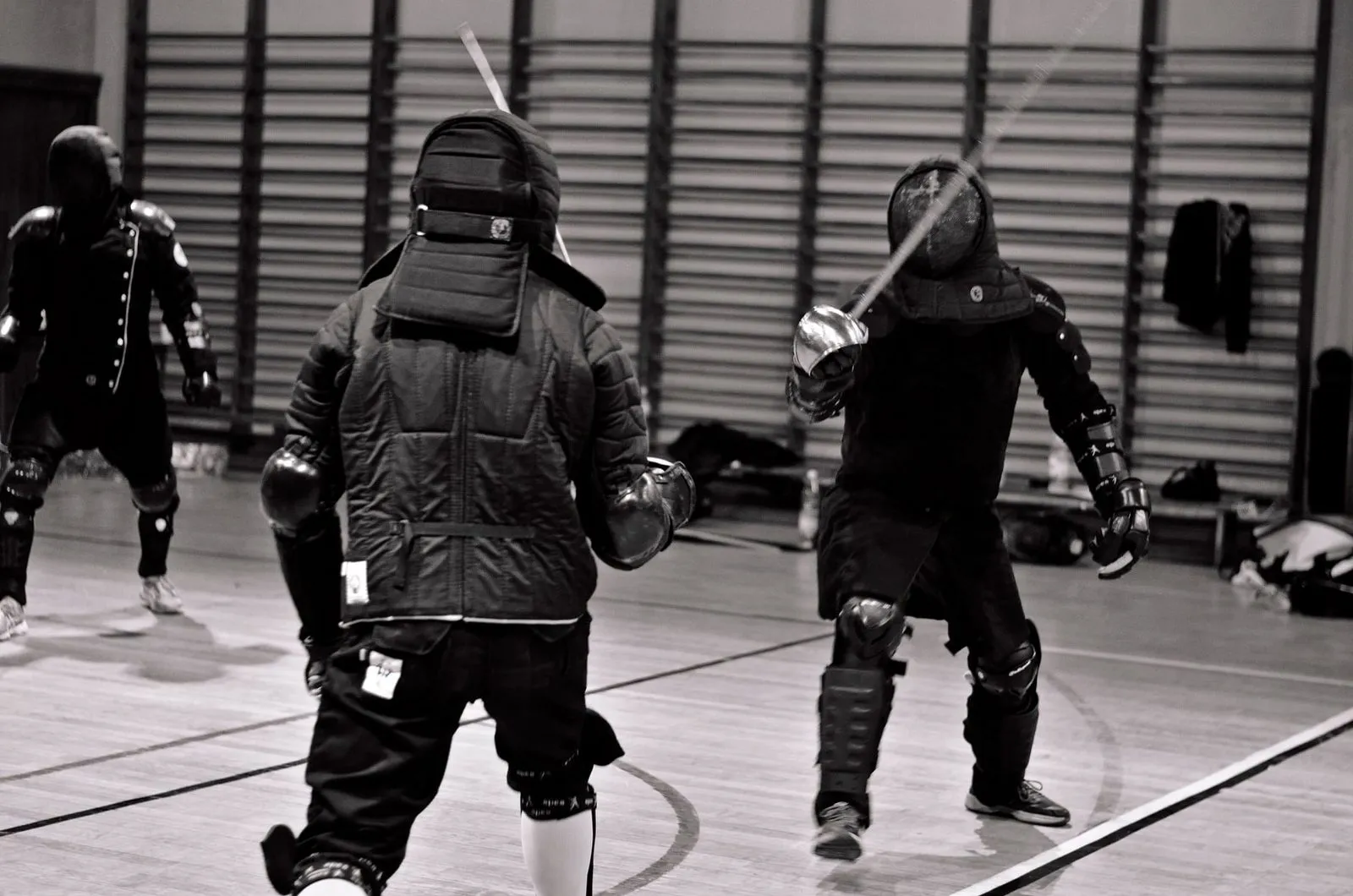
None of these forms exist as real martial arts. People who duel with real polycarbonate sabers use their own curricula. LudoSport, the Italian sport founded in Milan in 2006, has its own curriculum with style exams, and its own rules about target areas and safety [10].
FAQ
How many lightsaber forms are there?
Seven, numbered I to VII. Forms V and VII each have two named branches (Shien and Djem So, Juyo and Vaapad) [5][7].
Which lightsaber form is the strongest?
The sources do not rank them. Each form trades defense, offense and risk differently, and the wiki describes Form VII as the most aggressive and Form III as the most defensive [3][7].
Which form did Obi-Wan Kenobi use?
The wiki names him as a Soresu (Form III) master [3].
Which form did Anakin Skywalker use?
Djem So, from Form V, and he also adjusted Form IV techniques [4][5].
Are the forms real?
No. They are fictional systems from Star Wars. Real saber sports teach different techniques [10].
Sources
- Wookieepedia, Form I, https://starwars.fandom.com/wiki/Form_I (accessed 2026-11-06)
- Wookieepedia, Form II, https://starwars.fandom.com/wiki/Form_II (accessed 2026-11-06)
- Wookieepedia, Form III, https://starwars.fandom.com/wiki/Form_III (accessed 2026-11-06)
- Wookieepedia, Form IV, https://starwars.fandom.com/wiki/Form_IV (accessed 2026-11-06)
- Wookieepedia, Form V, https://starwars.fandom.com/wiki/Form_V (accessed 2026-11-06)
- Wookieepedia, Form VI, https://starwars.fandom.com/wiki/Form_VI (accessed 2026-11-06)
- Wookieepedia, Form VII, https://starwars.fandom.com/wiki/Form_VII (accessed 2026-11-06)
- StarWars.com Databank, Lightsaber, https://www.starwars.com/databank/lightsaber (accessed 2026-11-06)
- Looper, All 7 Star Wars Lightsaber Forms Explained, https://www.looper.com/2200922/star-wars-lightsaber-forms-explained/ (accessed 2026-11-06)
- Wikipedia, Ludosport, https://en.wikipedia.org/wiki/Ludosport (accessed 2026-11-06)
Editorial team
Writes for Saber Forge Forum. Every guide is checked against the maker's specs and dated, so you know how fresh it is.